Gallery
7 Things You Didn’t Know About the Kakapo – The World’s Strangest Parrot
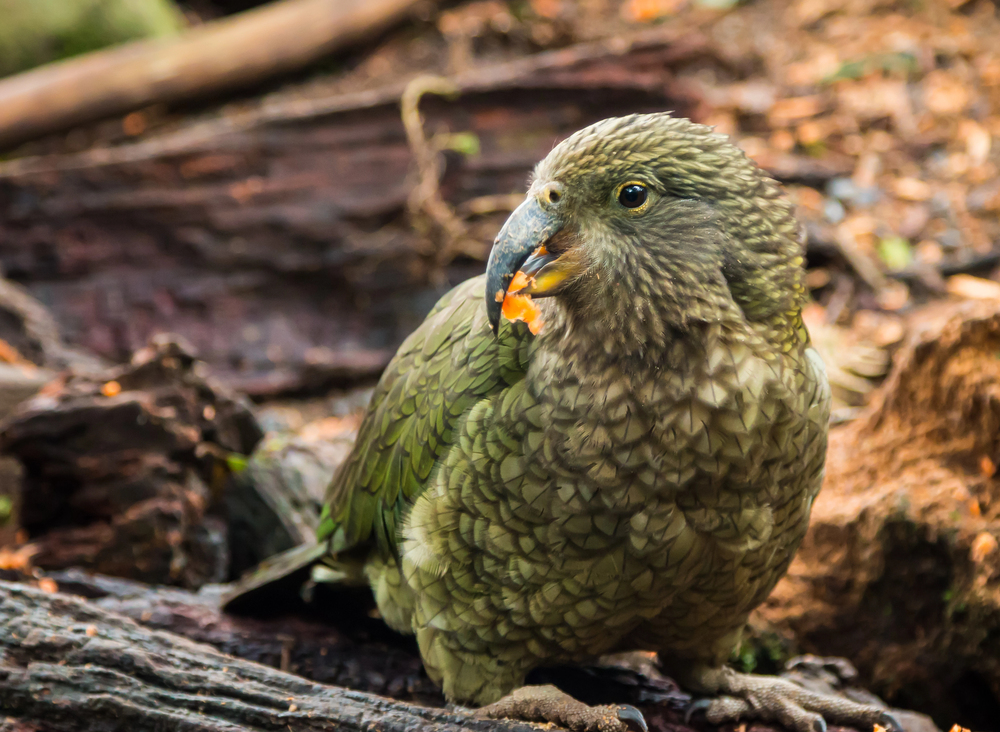
The kakapo is undoubtedly one of nature’s most peculiar creatures. This large, green, flightless parrot from New Zealand resembles something straight out of a fantasy film, with a history equally as spectacular. Here are seven surprising facts about the kakapo that you probably didn’t know.
 Depositphotos
The kakapo is undoubtedly one of nature’s most peculiar creatures. This large, green, and flightless parrot from New Zealand resembles something straight out of a fantasy film – and its history is equally as spectacular. Here are seven surprising facts about the kakapo that you probably didn’t know.
#1: It Can’t Fly
 Gnomon at Hungarian Wikipedia, CC BY-SA 3.0 via Wikimedia Commons
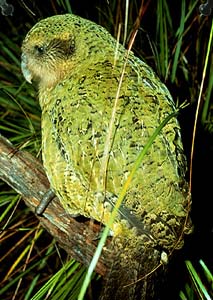
The kakapo is one of the only parrots in the world that cannot fly. Instead, it clumsily moves around on the ground and climbs trees with its strong claws. Evolution took a unique turn for the kakapo, which, in the absence of natural predators in New Zealand, never needed its wings for anything other than balance and parachute-like gliding from trees.
![]()
Read also:
#2: It Smells a Little Too Good
 Depositphotos
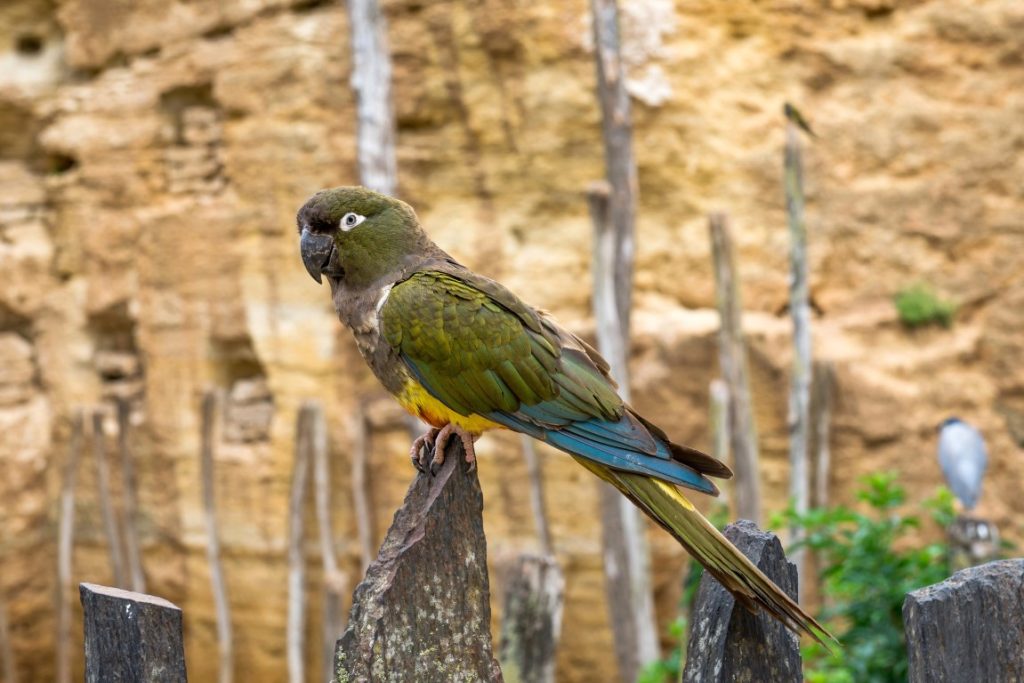
The kakapo has a distinctive musky scent described by scientists as sweet and herbal. It may sound charming, but it’s a disadvantage—especially for an endangered species. This characteristic smell makes it easy for predators to track down the otherwise reclusive bird.
#3: It Only Breeds Every Two to Four Years
 Depositphotos.com
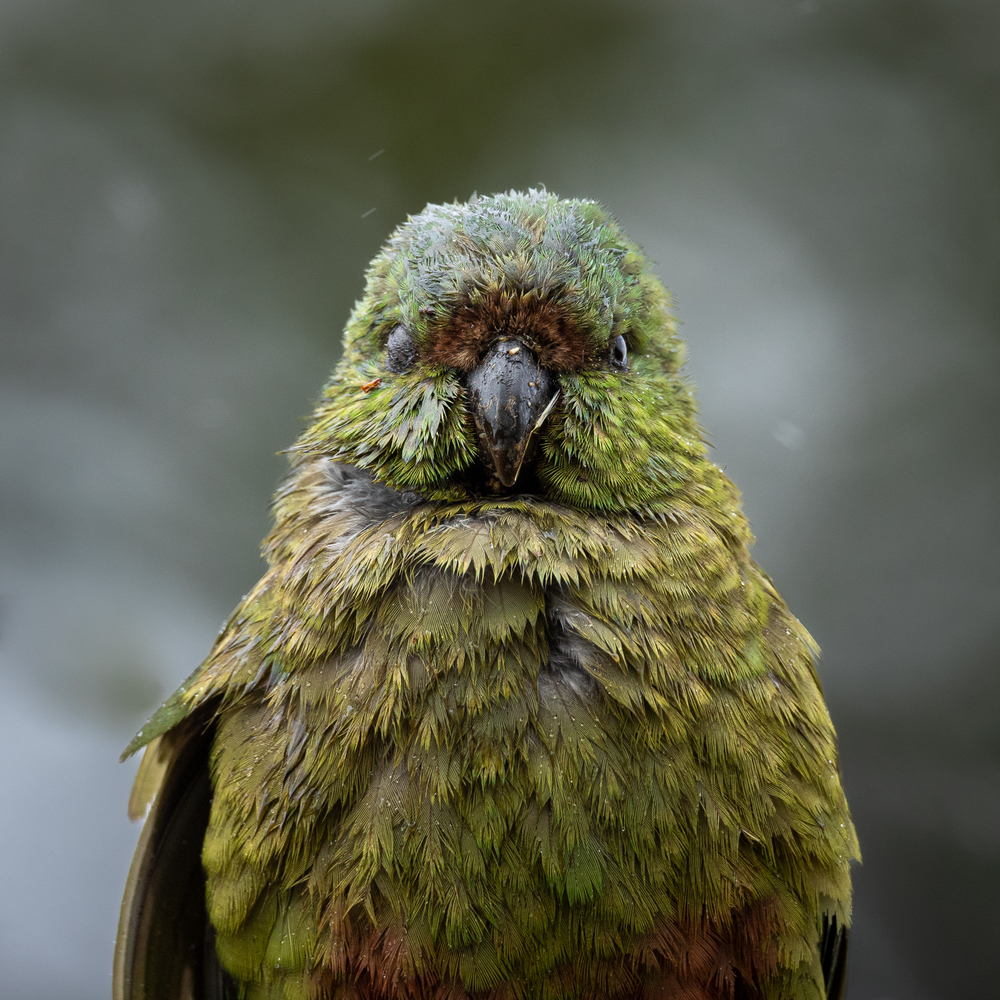
The kakapo has one of the most unusual breeding rhythms among birds. It reproduces only in years when rimu trees, one of New Zealand’s native species, produce an abundance of fruits.
This typically happens only every two to four years, making the species’ recovery even more challenging.
#4: It Has Nocturnal Habits
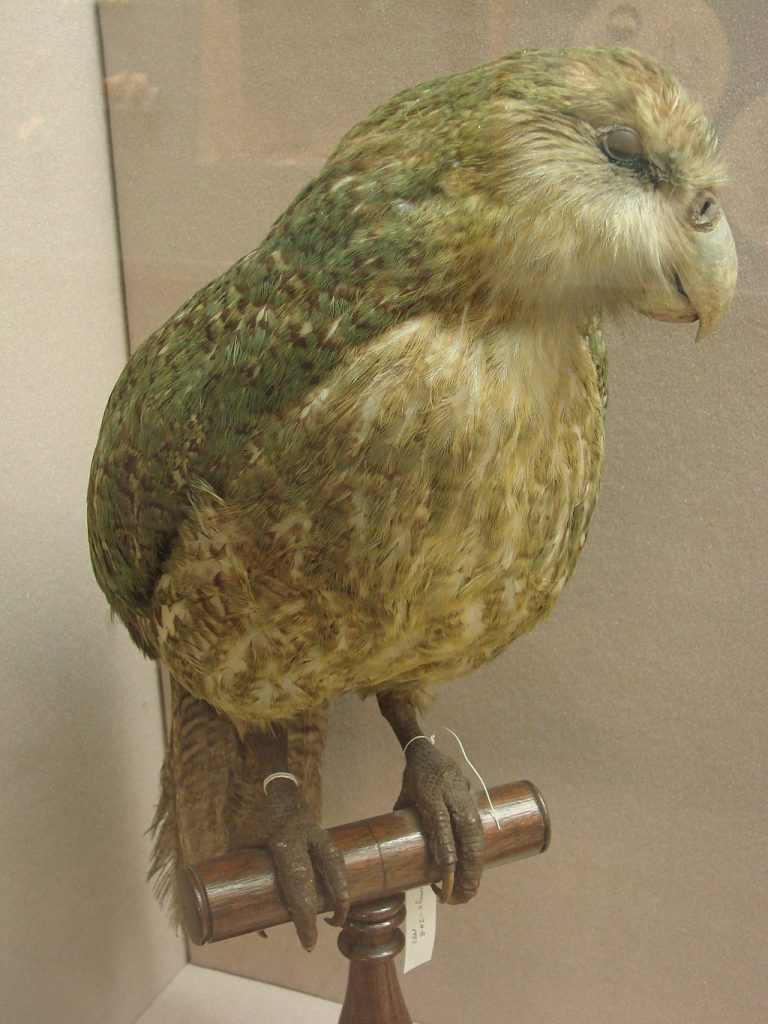 Allie_Caulfield, CC BY 2.0 via Wikimedia Commons
The kakapo is nocturnal and spends the day hidden in crevices and among vegetation. At night, it emerges to forage and explore its territory.
This makes it extremely difficult for scientists and volunteers to monitor the population, thus requiring GPS collars for tracking.
#5: It Puts on a “Boom Show” to Attract Females
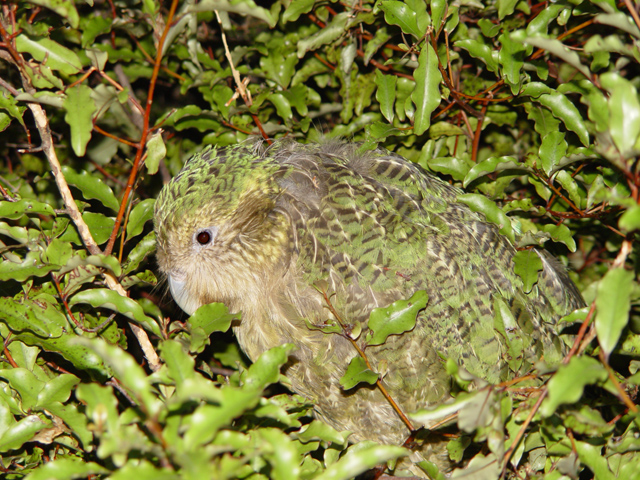 Mnolf, CC BY-SA 3.0 via Wikimedia Commons
During the breeding season, the male kakapo emits low-frequency “boom” sounds that can be heard up to five kilometers away.
He sits in a sort of depression in the ground and repeats the boom for hours, day after day. It’s like a natural sound system that would put even the most hardcore festival DJs to shame.
#6: It Has Its Own Team of Bodyguards
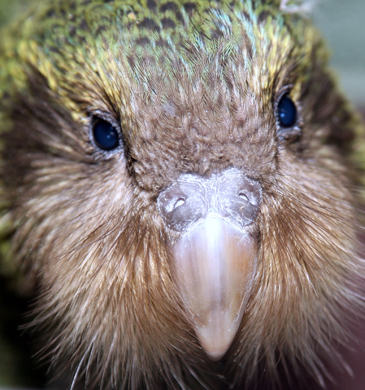 Department of Conservation, CC BY 2.0 via Wikimedia Commons
The kakapo is so endangered that each bird has a name and a team of researchers and volunteers monitoring its health and movements.
There are fewer than 250 kakapos left in the world, all of which live on a few predator-free protected islands. Each bird has its own GPS tracker, and some have even undergone artificial insemination to help the population.
#7: It Became World-Famous by Accident
 Department of Conservation, CC BY 2.0 via Wikimedia Commons
In 2009, a BBC recording with wildlife presenter Mark Carwardine went viral when the kakapo named “Sirocco” jumped on his head and attempted to mate.
The video became an internet phenomenon, making Sirocco the species’ official “spokesbird.” He even got his own Facebook page and was appointed as an official ambassador for endangered species in New Zealand.
Our team may have used AI to assist in the creation of this content, which has been reviewed by our editors.
![]()
Read also: